
Clinical Takeaways & Core Realities
- Phimosis is chronic, non-urgent foreskin tightness.
- Paraphimosis is an acute surgical emergency.
- Avoid forced retraction to prevent irreversible micro-scarring.
- Diabetes increases fungal risk, leading to preputial skin hardening.
What Is Phimosis?
Phimosis occurs when the foreskin is too tight to be pulled back over the head of the penis. In young children, this is often normal and usually improves naturally as they grow. However, in older boys and adult men, phimosis may result from infections, inflammation, scarring, poor hygiene, or certain skin conditions.
Developmental Phimosis
In young children, this is often normal and usually improves naturally as they grow.
Pathologic/Acquired Phimosis
In older boys and adult men, phimosis may result from infections, inflammation, scarring, poor hygiene, or certain skin conditions.
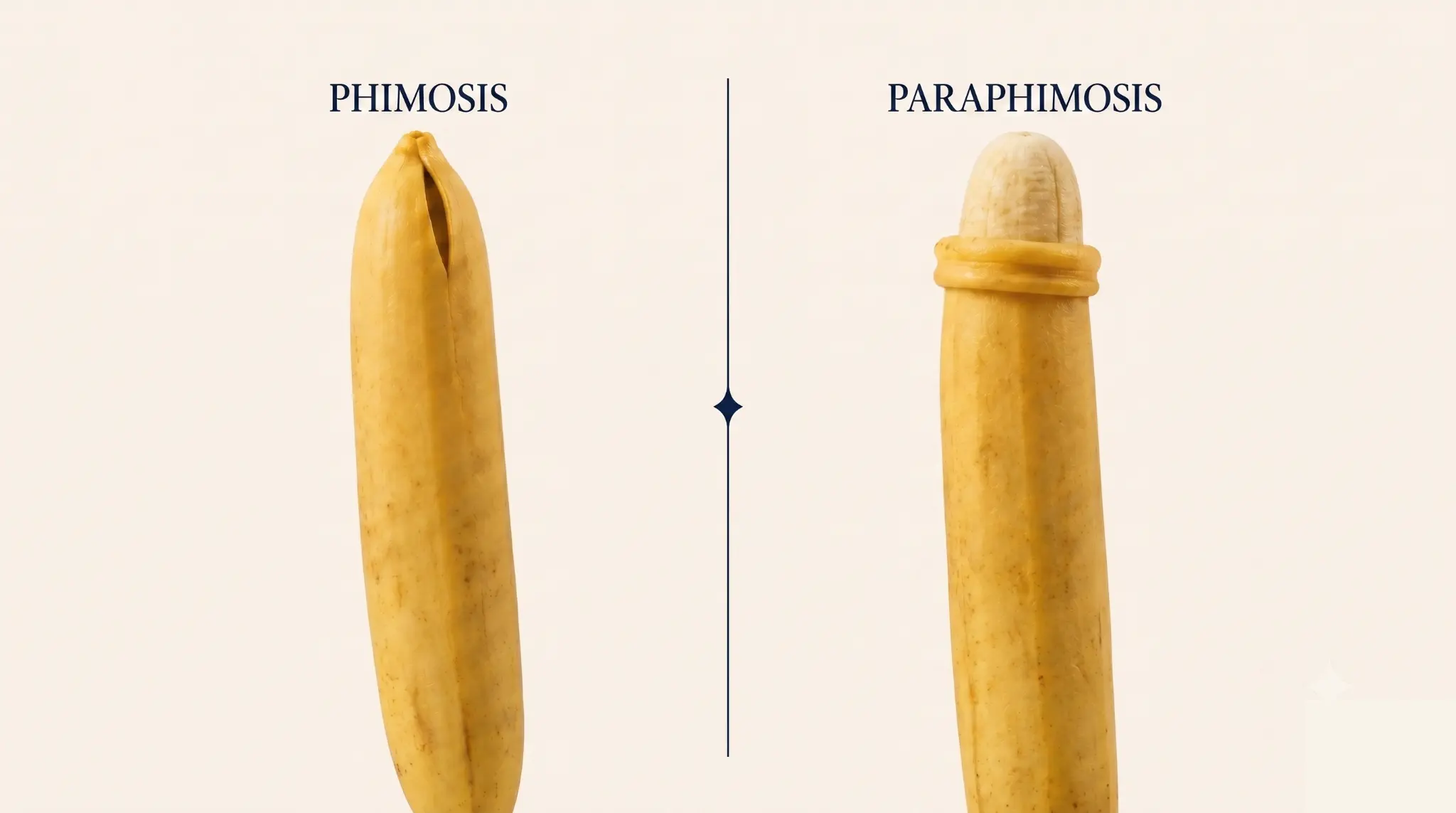
Clinical Illustration 1: Representation of Phimosis. The preputial opening is heavily strictured, preventing natural retraction back over the glans.
Doctor's Clinical Tip
"Gentle, progressive stretching is the gold standard for non-scarred physiologic phimosis. Never retract a tight foreskin aggressively, especially in children, as this creates tiny skin tears that heal as hard, fibrous scar tissue—converting an easy-to-treat situation into pathologic phimosis requiring surgical intervention."
— Dr. Satender Tanwar, Senior Consultant Urologist & Andrologist
What Is Paraphimosis?
Paraphimosis occurs when the foreskin is pulled back behind the head of the penis but becomes trapped and cannot return to its normal position.
CRITICAL WARNING: UROLOGICAL EMERGENCY
Unlike phimosis, paraphimosis is a medical emergency because the trapped foreskin can restrict blood flow to the penis, causing swelling, severe pain, and potential tissue damage.
Clinical Illustration 2: Representation of Paraphimosis. The retracted preputial band forms a tight constriction ring around the coronal sulcus, choking lymphatic flow and leading to severe edema of the glans.
Phimosis vs Paraphimosis: Key Differences
This table provides a high-contrast side-by-side comparison of the core indicators to assist in diagnostic accuracy and safe triage decision-making.
| Clinical Parameter | Phimosis | Paraphimosis |
|---|---|---|
| Movement Limitation | Can't Pull Back | Can't Pull Forward |
| Foreskin Status | Foreskin is too tight | Foreskin is trapped behind the penis head |
| Onset of Condition | Usually develops gradually | Usually occurs suddenly |
| Pain & Swelling | May not be painful initially | Often painful and swollen |
| Emergency Status | Usually not an emergency | Medical emergency |
Symptoms & Signs: How to Identify Each Condition
Phimosis Indicators
- 1Tight foreskin
- 2Difficulty retracting the foreskin
- 3Pain during erections
- 4Difficulty urinating
- 5Ballooning of the foreskin during urination
- 6Redness or irritation
- 7Recurrent infections
- 8Difficulty maintaining proper hygiene
Paraphimosis Indicators
- 1Foreskin stuck behind the penis head
- 2Swelling of the foreskin
- 3Swelling of the penis head
- 4Severe pain
- 5Difficulty urinating
- 6Tight constricting ring behind the glans
- 7Red, purple, or dark-colored penis head
Why Paraphimosis Is an Emergency
Tight Constricting Ring
The trapped foreskin acts like a tight band around the penis.
Venous Swelling & Restriction
As swelling increases, blood flow becomes restricted.
Tissue Damage Risk
If not treated promptly, the lack of circulation can damage penile tissue and, in severe cases, lead to permanent complications. This is why paraphimosis should never be ignored.
Causes & Risk Factors
Paraphimosis commonly develops when a retracted foreskin is not returned to its normal position. As swelling develops, the foreskin becomes trapped behind the head of the penis, creating a tight ring that restricts blood circulation.
Recurrent Infections
Repeated infections of the foreskin or penis can lead to scarring and tightening.
Poor Hygiene
Failure to clean beneath the foreskin regularly may increase the risk of inflammation and infection.
Diabetes
Men with uncontrolled diabetes are more prone to infections, which may contribute to foreskin tightening.
Skin Disorders
Certain skin conditions can cause scarring and loss of foreskin elasticity.
Forceful Retraction
Trying to force the foreskin backward can cause small tears and scarring over time.
Key Risk Factors for Both Conditions
How Doctors Diagnose and Treat These Conditions
Diagnosis is usually straightforward and involves a physical examination. A healthcare provider will assess: foreskin mobility, presence of swelling, signs of infection, pain level, and blood circulation to the penis. Additional tests are rarely required unless an underlying condition such as diabetes or infection is suspected.
Treatment Pathways for Phimosis and Paraphimosis
Conservative Treatment (Phimosis)
Many mild cases improve with: proper hygiene, medicated steroid creams, gentle stretching exercises under medical guidance, or treatment of underlying infections.
Surgical Treatment (Phimosis)
Persistent or severe cases may require: Circumcision (removal of the foreskin permanently resolves phimosis) or foreskin-preserving procedures to widen the foreskin while preserving it.
Reduce Swelling
Special techniques may be used to decrease swelling around the penis.
Reposition the Foreskin
The foreskin is carefully moved back over the head of the penis.
Minor Surgical & Long-term Care
If swelling is severe, a small incision may be required to release pressure. Circumcision may be recommended later to prevent recurrence.
Core Intervention Modalities Explained
Conservative Options (Phimosis)
Proper hygiene, medicated steroid creams, gentle stretching exercises under medical guidance, and treatment of underlying infections.
Surgical Options (Phimosis)
Circumcision (removal of the foreskin permanently resolves phimosis) or foreskin-preserving procedures to widen the foreskin while preserving it.
Urgent Options (Paraphimosis)
Special techniques to reduce swelling, repositioning the foreskin, or minor surgical procedures like a small incision to release pressure, followed by possible subsequent circumcision.
Can Phimosis and Paraphimosis Be Prevented?
Prevention Tips
- Maintain good genital hygiene
- Clean beneath the foreskin regularly
- Return the foreskin to its normal position after cleaning
- Treat infections promptly
- Avoid forcefully retracting the foreskin
- Manage diabetes effectively
When Should You See a Doctor?
- For Phimosis: Tight foreskin, pain during erections, difficulty urinating, recurrent infections, or problems with hygiene.
- For Paraphimosis: Foreskin stuck behind the penis head, severe swelling, intense pain, changing color (red, purple, dark), or difficult urination.
Final Thoughts
Although Phimosis and Paraphimosis involve the foreskin, they are very different conditions with different levels of urgency. Phimosis occurs when the foreskin is too tight to pull back and is often manageable with proper treatment. Paraphimosis occurs when the foreskin becomes trapped behind the penis head and cannot move forward again. Because it can restrict blood flow and damage tissue, it should always be treated as a medical emergency.
Frequently Asked Questions (FAQ)

Dr. Satender Tanwar
Senior Consultant Urologist & Andrologist
Dr. Satender Tanwar is an experienced sexologist helping men overcome fertility, sexual health, and relationship concerns through personalized Ayurvedic care.
Clinical Expertise
More From Dr. Satender Tanwar
 Article
Phimosis vs Paraphimosis: Understanding the Difference, Symptoms, Causes, and Treatment
Many men have heard the terms Phimosis and Paraphimosis, but few understand the important difference between them.
 Article
Syphilis: Symptoms, cause and treatments
This disease is also an infectious (contagious) disease, meaning it can be transmitted from an infected woman to a healthy man, and vice versa.
 Article
Penis Size and the Confusion Among Young Men
It is well known that the penis is the most important organ for sexual activity. Many people are curious about its length and thickness.
 Video
Morning Mein Penis Ne Salute Marna Band Kar Diya?
Educational breakdown discussing diagnostic markers for morning vitality tracking parameters.
 Video
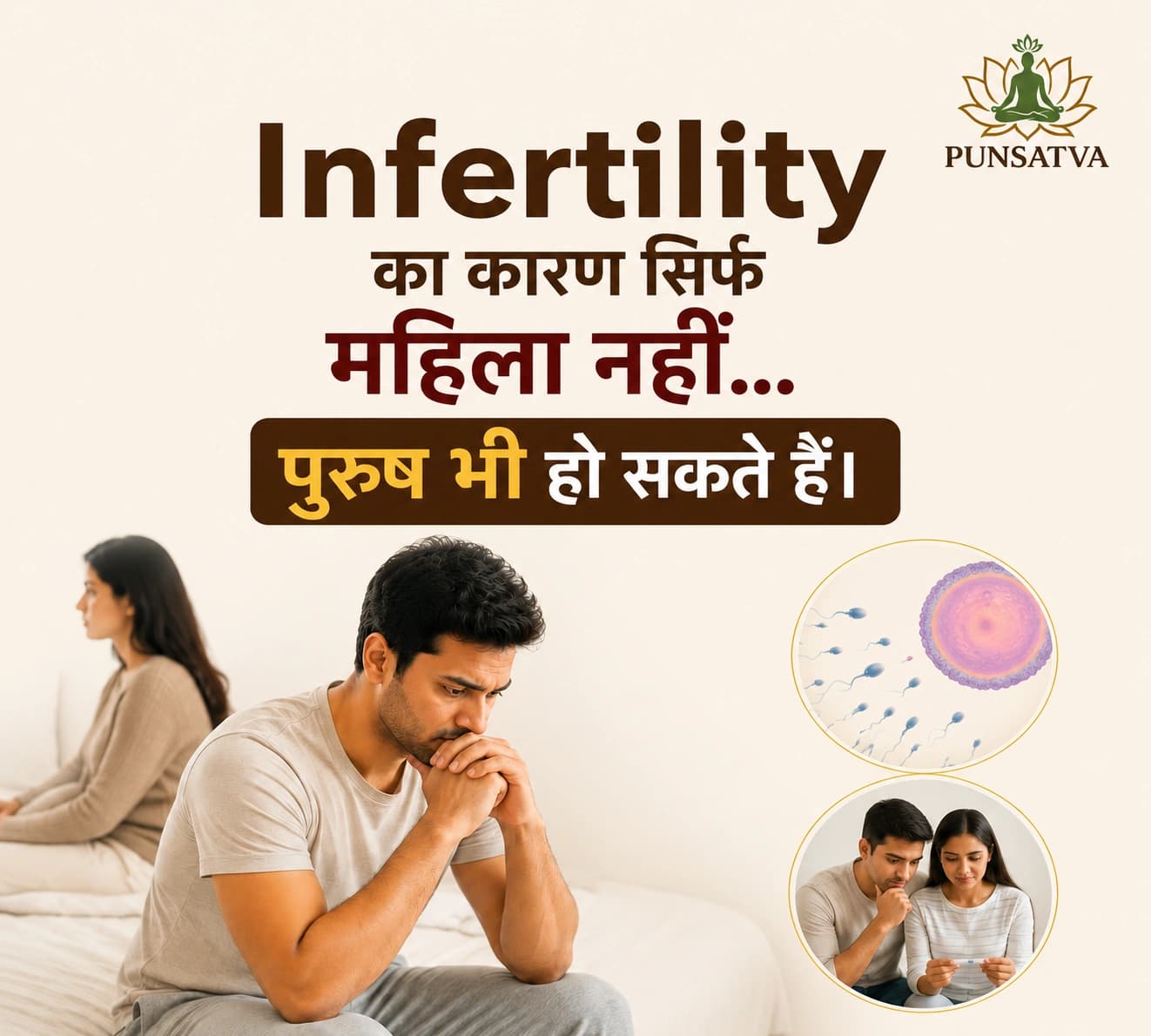
Infertility isn't always a woman's issue
Clinical andological discussion regarding male reproductive health contribution levels.
 Video
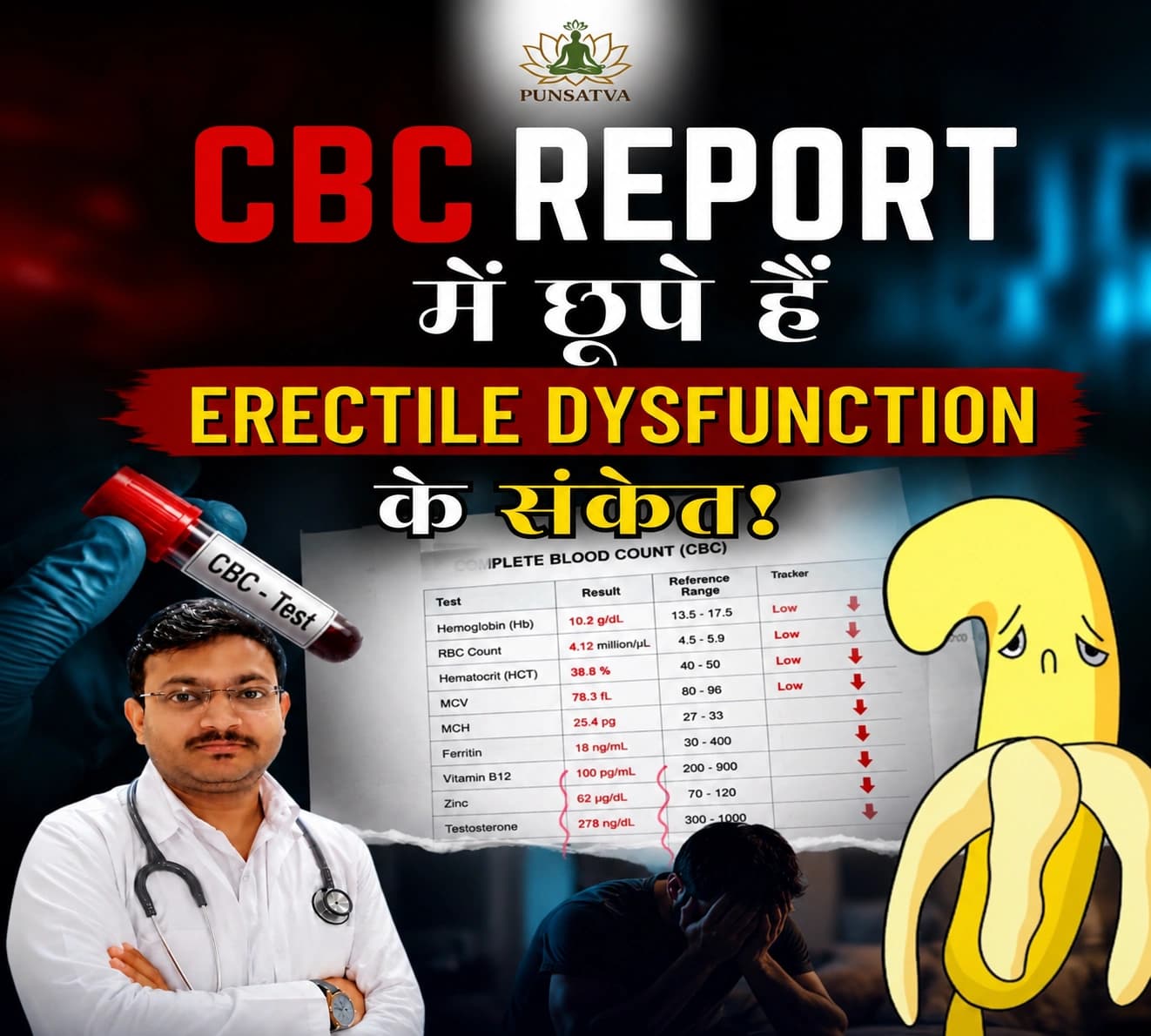
CBC Report में छुपे हैं Erectile Dysfunction के संकेत!
Distinguishing physiological blood parameter shifts relative to intimate system response efficiency.
A Comparative Clinical Study on Vajikarana Formulations in Oligozoospermia Management
Tanwar, S., Sharma, A. et al. (2024). International Journal of Ayurvedic Medicine, 15(2), 112-119.
Ayurvedic Management of Psychogenic Erectile Dysfunction: Case Reports
Tanwar, S. (2023). Indian Journal of Traditional Knowledge, 22(4), 455-461.
Related Medical Content
The Ultimate Guide to Balanitis: Prevention and Care
Understanding Male Hormones: What Happens as You Age?
Vasectomy vs No-Scalpel Vasectomy: A Clinical Comparison
The Role of Diet and Exercise in Boosting Male Fertility
Warning Signs of Prostate Enlargement (BPH)
Male Urinary Tract Infections: Symptoms & Treatments
Subscribe to Punsatva Educational Updates
Get certified clinical literature, research summaries, and male metabolic health advice written by urologists directly in your inbox. No spam. Unsubscribe anytime.